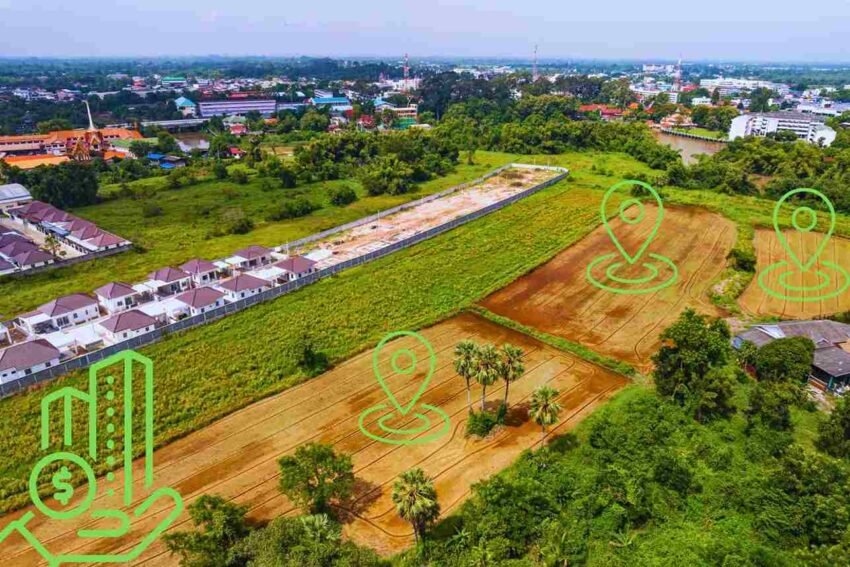
Investors are rushing back to land in real estate. For years, investors paid more heed to apartments and commercial properties with rental income like shopping centers and office buildings because of rental income and the ability to quickly resell. Yet increasing real estate values, rapid urbanization and infrastructure development are putting focus again on land as a means to build wealth over the long term. Today, land is increasingly viewed by investors as a flexible and high-yielding investment choice.
1. Lower Entry Cost than New Built Property
In a lot of places you can find properties at a cost that tends to be lower price of the ready-space home or apartment. And no construction costs at time of purchase mean first-time investors can afford to leap in.
2. Higher Long-Term Appreciation Potential
Land in build-on areas tends to increase more quickly. Land prices can soar when infrastructure projects such as highways, metro lines or industrial zones are built nearby. Those who get in early are the biggest beneficiaries of this growth.
3. No maintenance or rental management headache
Land is not a home no cost of maintenance, tenancy or repairs.
- No monthly maintenance charges
- No tenant-related issues
- No renovation expenses
- Minimal upkeep
- Flexible holding period
That’s what makes land a hassle-free investment.
4. Urban Expansion and Growing Infrastructure
Cities are expanding rapidly. As cities expand the definition of urban moves out and what once was far from anywhere becomes prime lan d. Developed infrastructure corridors, industrial parks and smart city projects in turn are driving the demand for plotted development.
5. Flexibility in Usage
Land offers multiple usage options. Investors can simply hold it for appreciation, build a home at a later date, lease it for agricultural or commercial purposes or sell it when prices go up. This flexibility adds long-term value.
6. Hedge Against Inflation
Real estate is widely heralded as a potent inflation hedge. When construction prices and property values surge, the value of land typically increases. Over time, that helps preserve and even grow purchasing power.
- Limited supply of land
- Increasing population demand
- Infrastructure-driven price growth
- Long-term appreciation trend
- Rising development potential
All of these factors underpin increasing values.
7. Rising Interest in Agricultural and Farm Land
Interest in farm houses have gone up with less movement and pandemic lifestyle changes. Many buyers are purchasing land outside of cities to use as personal retreats, organic farms or weekend homes.
8. Reduced Risk of Structural Depreciation
Structures deteriorate from years of use and weathering. There is no depreciation in many types of land. It is worth little except in relation to where it is and supply, not for any physical condition.
9. Investor Awareness and Research Tools
Investors today suffer from better market data and online platforms. This will simplify the process of accessing investment opportunities in land, checking legal approvals and development plans before purchasing.
10. Things to Consider Before Investing
There are advantages to a land investment, but buyers need to verify that there are clear titles, zoning rules and future development plans. Good research is an investment in a safe and profitable future.
Key Takeaways
Investing in land is getting traction as it is affordable, offers long-term appreciation potential, and is generally zero maintenance activity barring urban sprawl, which brings with it increased demand and thus prices. Through adequate research and the right location selection, land could be a powerful asset for wealth creation. But it‘s always a good idea to consult with a lawyer before you buy.
FAQs:
Q1. Is land a better investment than apartments?
Land is more likely to experience long-term appreciation, but it doesn’t generate rental income.
Q2. Does land require maintenance?
There is little maintenance required compared to a structure.
Q3. Is land investment risky?
It can be safe if legal documents and development plans check all the boxes.
Q4. For how long should land be held for profit?
Real estate investment in land typically pays off over time.
Q5. Can land prices fall?
Of course there are short-term fluctuations, but long-term trends are frequently good in the poor parts of the world.